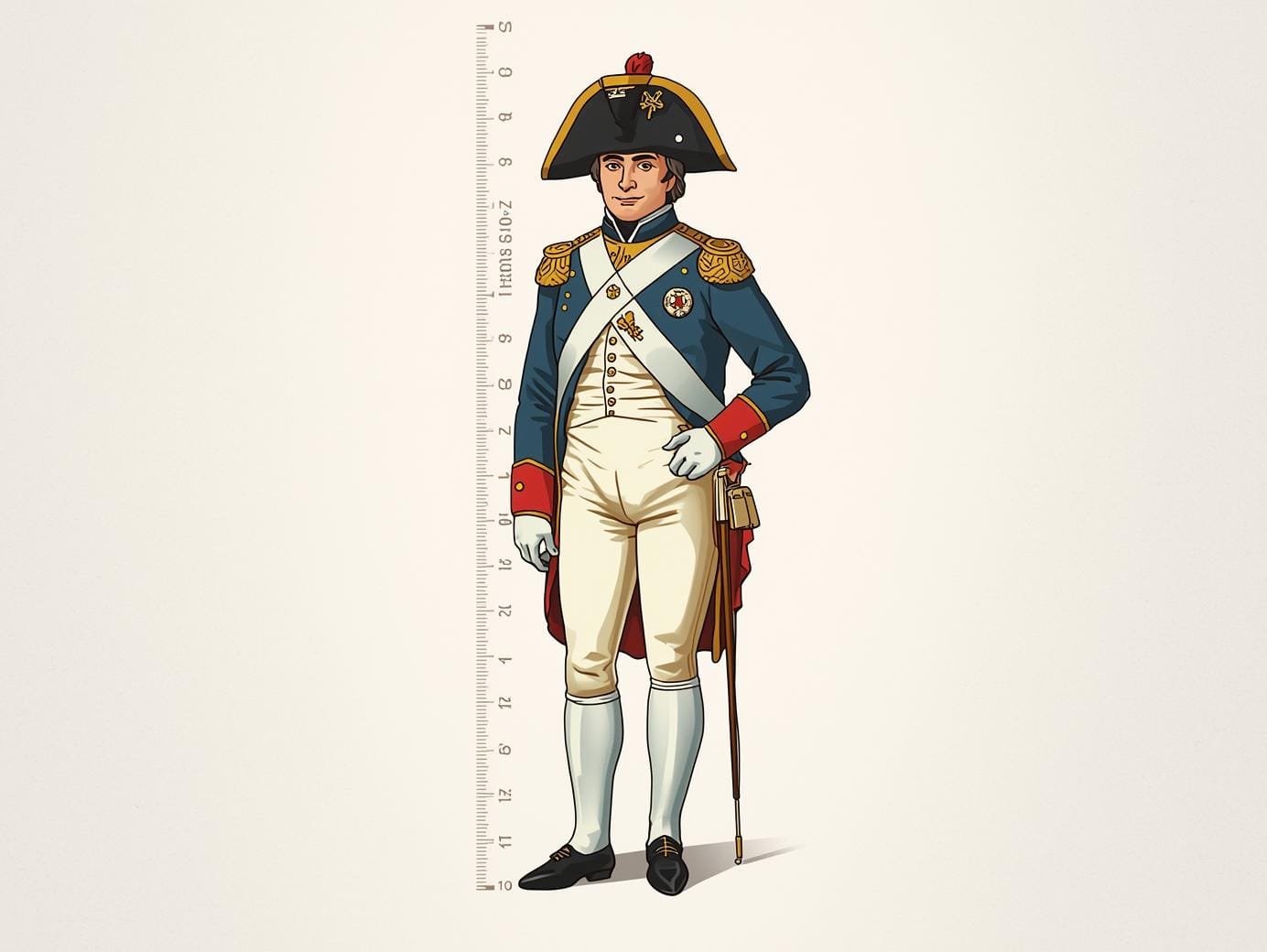
How Tall Was Napoleon? The Truth Behind History’s Most Persistent Myth
Napoleon Bonaparte stood approximately 5 feet 6 inches (168 cm) tall, which was actually average height for a French man during the early 19th century. Contrary to popular belief, the question of how tall was Napoleon has been distorted by centuries of British propaganda, measurement confusion, and political caricature. The Emperor of France was never the diminutive figure that cartoons and popular culture have portrayed him to be.
Understanding how tall was Napoleon requires examining the historical context of height measurements, the origins of this enduring misconception, and why it matters for our understanding of one of history’s most influential military leaders.
The Historical Evidence of Napoleon’s True Height
When Napoleon died in 1821 on the island of Saint Helena, his personal physician Francesco Antommarchi recorded his height as 5 feet 2 inches. This measurement, however, used French units of the time. The French inch (pouce) was longer than the British imperial inch, creating immediate confusion that would fuel the myth for generations.
Converting French measurements to British standards reveals how tall was Napoleon in terms we understand today. The 5 feet 2 inches in French units translates to approximately 5 feet 6 inches or 5 feet 7 inches in imperial measurements. Multiple historical records, including measurements taken during his military examinations and autopsy reports, consistently support this height range.
Contemporary accounts from those who met Napoleon personally describe him as average height among his peers. His Corsican heritage and typical build for Mediterranean men of his era further support these measurements. The question of how tall was Napoleon becomes less about actual measurements and more about how political propaganda shaped historical perception. Read More!
Why the Short Napoleon Myth Persists
British political cartoonists, particularly James Gillray, portrayed Napoleon as comically short during the Napoleonic Wars. These caricatures served as effective wartime propaganda, diminishing the enemy leader’s stature both literally and figuratively. The cartoons depicted him as a tiny, ineffectual figure, often throwing tantrums or being dominated by taller figures.
The myth gained additional traction because Napoleon surrounded himself with elite Imperial Guard soldiers who stood over 6 feet tall. This practice made him appear shorter by comparison in public appearances and official portraits. When people ask how tall was Napoleon compared to his guards, the visual contrast was deliberately striking.
The “Napoleon complex” term emerged in psychology to describe perceived overcompensation by shorter individuals, further cementing the false narrative about his height. This psychological concept, though not scientifically validated, became culturally associated with Napoleon despite being based on inaccurate historical information.
Height Standards in Early 19th Century Europe
Understanding how tall was Napoleon requires context about average heights during his lifetime. In early 1800s France, the average male height ranged from 5 feet 4 inches to 5 feet 6 inches. Malnutrition, childhood diseases, and poor living conditions kept average heights considerably lower than modern standards.
Napoleon’s height of 5 feet 6 inches placed him squarely within the normal range for French men of his social class and generation. Military recruitment records from the period show that most French soldiers stood between 5 feet 3 inches and 5 feet 8 inches. The question of how tall was Napoleon becomes less remarkable when viewed against these demographic realities.
European aristocracy and military officers generally had better nutrition and healthcare, often resulting in slightly above-average heights. Napoleon’s Corsican background and relatively modest origins meant his height reflected typical Mediterranean genetics and living conditions of his youth.
The Imperial Image and Physical Presence
Despite accurate answers to how tall was Napoleon, his physical presence commanded attention through other means. Historical accounts emphasize his piercing gaze, confident bearing, and charismatic personality rather than his stature. His ability to inspire loyalty and fear had nothing to do with physical height.
Napoleon understood the power of image-making. His coronation portraits, military uniforms, and public appearances were carefully staged to project authority and power. He wore the characteristic bicorne hat sideways, making him more recognizable rather than taller. These calculated choices shaped how contemporaries perceived him.
Military leaders throughout history have demonstrated that physical height bears no correlation to leadership ability or military genius. When examining how tall was Napoleon in relation to his achievements, his height becomes an irrelevant detail overshadowed by his strategic brilliance and political acumen.
Modern Misconceptions and Cultural Impact
The persistence of questions about how tall was Napoleon reveals how effectively propaganda can shape historical memory. Even with readily available historical evidence, the “short Napoleon” image remains deeply embedded in popular culture. Movies, books, and casual references continue perpetuating the myth.
This misconception has educational implications. Students learning about Napoleon often fixate on his supposed shortness rather than his actual historical significance. Teachers and historians must actively correct this misinformation, using the question of how tall was Napoleon as a teaching moment about source criticism and propaganda analysis.
The myth demonstrates how physical characteristics become weaponized in political discourse. Modern leaders still face similar caricaturing and physical mockery as tools of opposition. Understanding how tall was Napoleon and how this myth developed provides insight into ongoing political communication strategies.
Lessons from Historical Misrepresentation
The Napoleon height myth offers valuable lessons about evaluating historical claims. Primary sources, measurement conversions, and cultural context all matter when determining historical facts. Researchers examining how tall was Napoleon must consider measurement systems, propaganda purposes, and reliability of different sources.
This case study reminds us to question widely accepted “facts” that serve particular narratives. The British had strong motivations to diminish Napoleon’s image during wartime. Modern audiences should apply similar skepticism to contemporary political messaging and characterizations.
Historical accuracy matters because these details shape our understanding of individuals and events. When we misrepresent how tall was Napoleon, we reduce a complex historical figure to a cartoonish caricature, missing opportunities to understand his actual impact on European history, legal systems, and military strategy.
The Verdict on Napoleon’s Height
After examining the evidence, we can definitively answer how tall was Napoleon: he stood approximately 5 feet 6 inches to 5 feet 7 inches tall, perfectly average for French men of his era. The enduring myth about his shortness stems from measurement confusion, effective propaganda, and the compelling nature of caricature over truth.
Napoleon’s legacy rests on his military campaigns, the Napoleonic Code, administrative reforms, and reshaping of European political boundaries—not his height. The question of how tall was Napoleon serves as a reminder that even well-known “facts” deserve scrutiny and that historical truth often differs from popular perception.
Understanding the real answer to how tall was Napoleon helps us appreciate how historical narratives form and persist. It demonstrates the lasting power of propaganda and the importance of returning to primary sources and evidence-based analysis when evaluating historical claims.
Frequently Asked Questions
Was Napoleon actually short for his time?
No, Napoleon was not short for his time. At approximately 5 feet 6 inches, he stood at average height for early 19th-century French men. The misconception arose from British propaganda and confusion between French and British measurement systems.
How did the myth about Napoleon’s height start?
The myth originated primarily from British wartime propaganda cartoons that depicted Napoleon as tiny and ineffectual. The confusion between French pouces (inches) and British inches, plus Napoleon’s habit of surrounding himself with tall guards, reinforced this false narrative.
What was Napoleon’s actual height in modern measurements?
Napoleon’s height was approximately 168-170 cm (5 feet 6 inches to 5 feet 7 inches) in modern measurements. His autopsy recorded 5 feet 2 inches in French measurements, which converts to this range in imperial units.
Why do people still think Napoleon was short?
The myth persists because it became deeply embedded in popular culture through centuries of repetition in books, films, and casual reference. The term “Napoleon complex” further reinforced the false association between Napoleon and short stature.
How tall were Napoleon’s Imperial Guards?
Napoleon’s Imperial Guard members typically stood over 6 feet (183 cm) tall, as height was a requirement for this elite unit. This created a visual contrast that made Napoleon appear shorter when photographed or painted alongside them.
Did Napoleon’s height affect his military career?
Napoleon’s height had no negative impact on his military career. He rose through ranks based on merit, strategic genius, and political acumen. His average height was never considered a disadvantage by contemporaries or military officials.
What can we learn from the Napoleon height myth?
This myth teaches us to critically evaluate widely accepted historical “facts,” recognize propaganda’s lasting effects, and understand the importance of consulting primary sources. It demonstrates how physical characteristics can be weaponized in political discourse and how misinformation persists across generations.