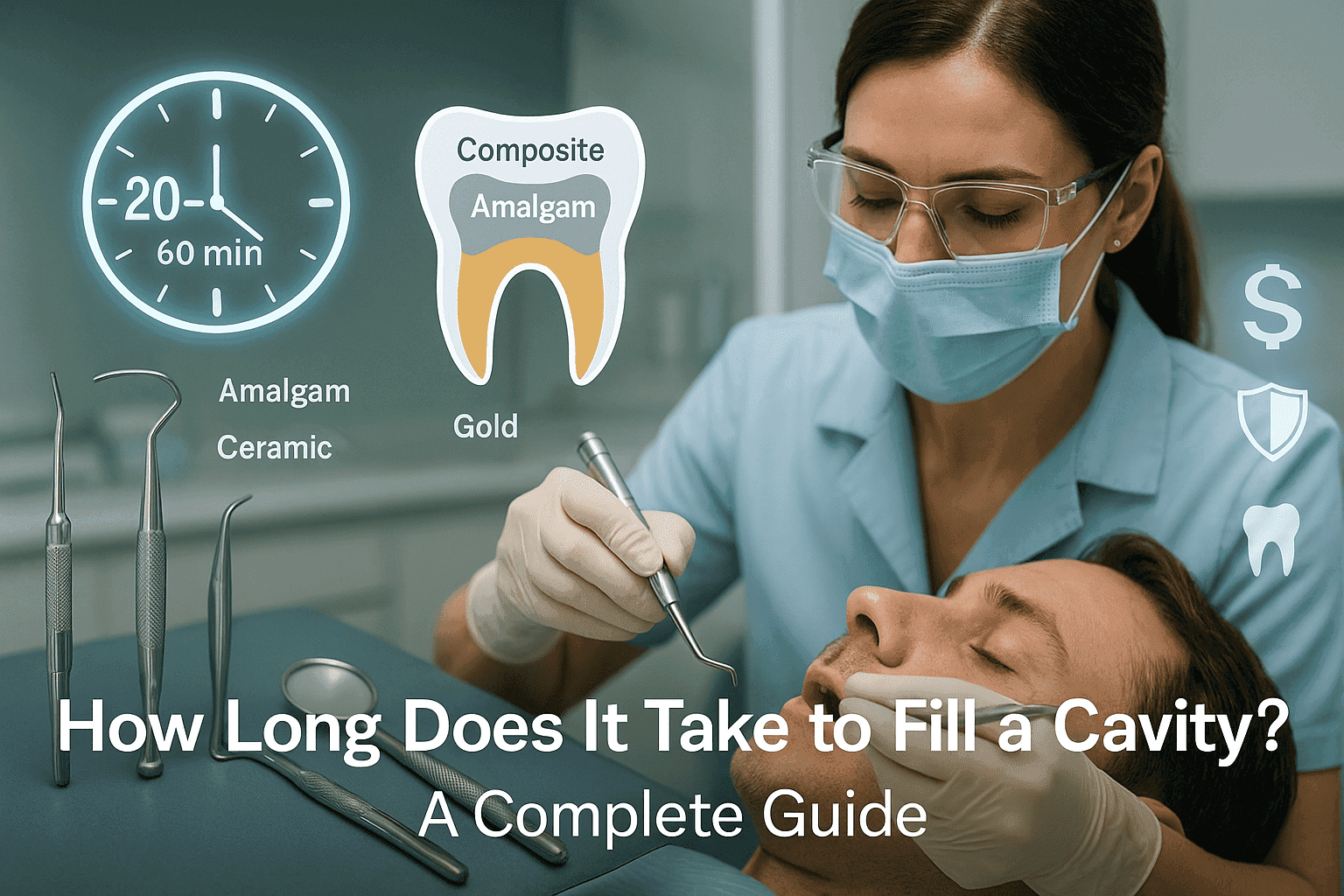
How Long Does It Take to Fill a Cavity? A Complete Guide
Cavities are one of the most common dental problems worldwide. Whether it’s your first dental filling or your fifth, one question often comes to mind: how long does it take to fill a cavity? The answer depends on several factors—such as the size of the cavity, the type of filling material, and the complexity of the dental filling procedure.
In this article, we’ll break down everything you need to know about cavity filling duration, types of fillings, the step-by-step procedure, costs, aftercare, and prevention.
How Long Does It Take to Fill a Cavity?
On average, a cavity filling takes 20 to 60 minutes per tooth. Small cavities can be completed in as little as 20–30 minutes, while larger or more complex fillings may take closer to an hour.
-
Small cavity filling time: 20–30 minutes.
-
Composite filling time: 30–45 minutes.
-
Amalgam filling time: 20–40 minutes.
-
Large cavity filling time: 45–60 minutes.
Factors That Affect Tooth Filling Duration
-
Size of cavity – Larger cavities take longer to clean and fill.
-
Filling material – Composite (tooth-coloured) fillings usually require more steps than amalgam fillings.
-
Number of cavities – Multiple fillings in one visit extend the dental filling procedure time.
-
Patient comfort – If local anaesthesia is needed, allow extra minutes for numbing.
Types of Dental Fillings and Their Timeframes
Dentists use different materials for fillings, each with its own advantages and treatment times.
Common Types of Fillings
-
Composite fillings (tooth-colored) – Popular for aesthetics; slightly longer procedure.
-
Amalgam fillings (silver) – Durable and faster to place.
-
Ceramic dental fillings – Strong and long-lasting, but usually require longer visits.
-
Gold dental fillings – Highly durable, often placed in multiple visits.
-
Glass ionomer fillings – Often used in children or non-chewing surfaces.
-
Temporary dental fillings – Quick solutions until a permanent filling can be done.
Learn more about dental care and oral health in our Health & Wellness section.
The Dental Filling Procedure: What to Expect
Step-by-Step Process
-
Numbing for dental fillings – Local anaesthesia is used if needed.
-
Cavity cleaning – Dentist removes decay using a drill or laser.
-
Filling placement – Composite or amalgam is layered into the tooth.
-
Shaping & polishing – Filling is adjusted for bite comfort.
Alternatives
-
Cavity filling without drilling – Laser or air abrasion methods are sometimes used.
-
Drill-free cavity treatment – Suitable for early decay detection.
Related read: Cavity prevention tips that actually work.
How Much Does a Dental Filling Cost?
The dental filling cost varies worldwide depending on material and location.
-
Composite fillings: $90–$250.
-
Amalgam fillings: $50–$150.
-
Ceramic fillings: $250–$500.
-
Gold fillings: $500+.
Insurance & Affordable Options
-
Many insurance plans cover part of the cavity filling price.
-
Medicaid dental fillings may be available in certain regions.
-
Look for affordable dental fillings or financing options if uninsured.
Dental Filling Aftercare & Recovery
Eating After Dental Filling
-
Wait at least 1–2 hours if numbing was used.
-
Avoid hard or sticky foods for the first day.
Common Issues
-
Dental filling sensitivity – Temporary, usually resolves in a few days.
-
Dental filling complications – Rare, but fillings may chip or loosen.
-
Dental filling fell out – Requires a dentist visit for repair.
Longevity
-
Most fillings last 5–15 years, depending on material and oral care habits.
Preventing Cavities: Long-Term Dental Health
Proven Strategies
-
Early cavity detection through regular checkups.
-
Fluoride treatment to strengthen enamel.
-
Dental sealants for children’s teeth.
-
Cavity prevention diet – Limit sugar and acidic foods.
-
Good oral hygiene – Brush twice daily, floss, and rinse.
Explore more cavity prevention methods on our blog.
FAQs About Cavity Fillings
Q1: How long does a cavity filling take without numbing?
Small cavities may only take 15–20 minutes if anesthesia isn’t required.
Q2: Does a cavity filling hurt?
With local anesthesia and modern tools, the procedure is usually painless.
Q3: Can I eat right after a cavity filling?
If no anesthesia was used, yes. Otherwise, wait until numbness fades.
Q4: How long do dental fillings last?
Composite fillings last 5–7 years, while gold or ceramic may last 15+ years.
Q5: What if my dental filling fell out?
Contact your dentist immediately to avoid infection or further decay.
Conclusion
So, how long does it take to fill a cavity? In most cases, less than an hour. But the exact cavity filling time depends on the size of the cavity, the material used, and your dentist’s approach.
With proper aftercare and cavity prevention strategies, your fillings can last for many years. Remember, the best way to reduce cavity filling duration is simple—prevent cavities before they form.
For more dental health tips and lifestyle guides, visit Pinstoppin.com.