How Many Keys on a Piano: Complete Guide to Piano Keyboard Layout
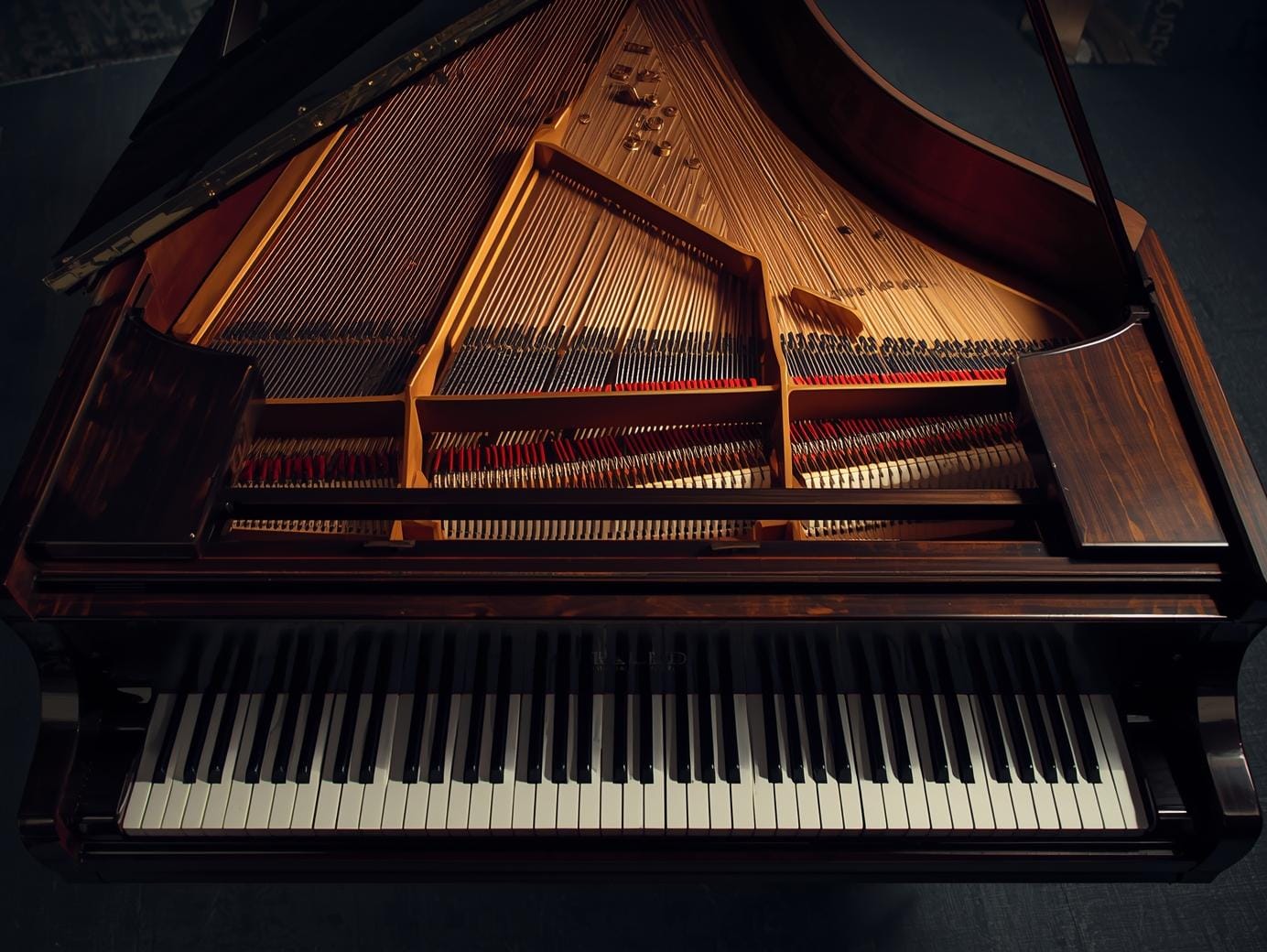
A standard modern piano has 88 keys, consisting of 52 white keys and 36 black keys that span seven octaves plus a minor third, from A0 to C8. This configuration became the industry standard in the 1880s when Steinway established this format, and it remains the universal specification for acoustic grand and upright pianos worldwide. Understanding how many keys on a piano helps musicians select appropriate instruments, composers write effectively for the instrument, and beginners grasp the keyboard’s layout.
The 88-key configuration wasn’t arbitrary. Piano manufacturers developed this range to accommodate the full scope of human hearing and musical composition needs. Knowing how many keys on a piano matters when purchasing instruments, learning music theory, or understanding why certain pieces require specific piano types.
Historical Development of Piano Key Numbers
Early pianos in the 1700s had far fewer keys than modern instruments. The fortepiano, predecessor to today’s piano, typically featured only 60 keys covering five octaves. Composers like Mozart and Haydn wrote for these smaller instruments, which explains why their piano compositions rarely venture into the extreme high or low registers.
As musical tastes evolved and concert halls grew larger, piano makers expanded keyboard ranges to produce greater volume and tonal variety. By the early 1800s, many pianos had 73 keys, giving composers like Beethoven access to six octaves. This expansion influenced compositional possibilities significantly.
The question of how many keys on a piano reached its current answer when Steinway & Sons introduced the 88-key model in the 1880s. Other manufacturers quickly adopted this standard, recognizing that additional keys beyond 88 offered diminishing returns since the extreme notes approached the limits of human pitch perception.
Some experimental pianos have exceeded 88 keys. The Bösendorfer Imperial Concert Grand features 97 keys, extending the bass register further. However, these extra keys serve specialized purposes and haven’t changed the standard answer to how many keys on a piano for most musical contexts. Read More!
Why 88 Keys Became the Standard
The standardization of how many keys on a piano at 88 reflects both acoustical science and practical musicianship. The lowest note, A0, vibrates at 27.5 Hz, approaching the threshold where humans perceive individual vibrations rather than continuous pitch. Going lower produces sounds that feel more like rhythmic pulses than musical notes.
At the opposite extreme, C8 vibrates at 4,186 Hz, near the upper limit of pitch discrimination for most listeners. Higher frequencies become difficult to tune accurately and produce tones that many describe as more percussive than melodic.
This range encompasses all the notes composers typically need. From thunderous bass passages in Rachmaninoff concertos to the delicate high register figurations in Debussy’s music, 88 keys provide complete expressive possibilities. Understanding how many keys on a piano includes recognizing this range serves virtually all Western musical requirements.
The physical dimensions of 88-key pianos also reached an optimal balance. Larger keyboards become unwieldy for movers and difficult to fit in homes or studios. The current standard allows instruments that are manageable yet musically complete.
Manufacturing standardization around 88 keys enabled economies of scale. When all major manufacturers agreed on how many keys on a piano, parts became interchangeable, replacement components more available, and production costs more predictable.
Different Piano Sizes and Key Counts
While 88 represents the standard answer for how many keys on a piano, various keyboard instruments feature different configurations for specific purposes. Digital pianos and keyboards often come in several sizes to accommodate different users and spaces.
Portable keyboards for beginners frequently have 61 keys, covering five octaves. These instruments suit elementary students learning basic repertoire and musicians needing highly portable options. The reduced key count makes these keyboards lighter and more affordable, though they limit what music you can play.
Intermediate digital pianos often feature 76 keys, spanning six octaves plus minor keys. This configuration accommodates most popular music, jazz standards, and intermediate classical pieces. Many gigging musicians prefer 76-key instruments as they balance portability with adequate range for professional performance.
Stage pianos and professional digital instruments typically maintain the full 88 keys, ensuring players can perform any piece without adaptation. Serious students and professional pianists generally insist on knowing how many keys on a piano matches the acoustic standard before making purchases.
Specialty instruments like toy pianos might have as few as 25 keys. While these serve educational or novelty purposes, they cannot replicate serious piano performance. Some composers have written specifically for toy piano’s limited range, creating a niche repertoire.
The Layout Pattern of Piano Keys
Understanding how many keys on a piano includes recognizing their organization pattern. The keyboard repeats a 12-note chromatic pattern across its range, with seven white keys (C, D, E, F, G, A, B) and five black keys (the sharps and flats) in each octave.
This layout originated from the diatonic major scale, where white keys play the C major scale without sharps or flats. Black keys provide the remaining chromatic tones, positioned for ergonomic reach. The staggered arrangement helps pianists navigate the keyboard tactilely, identifying positions without looking.
The pattern of black keys in groups of two and three serves as a crucial navigation aid. Experienced pianists locate middle C by finding the group of two black keys near the piano’s center. This visual and tactile landmark helps orient hand position quickly.
Each octave on the piano spans eight white keys and five black keys, totaling 13 keys per octave including the octave note. With 88 total keys, pianos contain just over seven complete octaves. The keyboard starts on A and ends on C, creating a range from A0 through C8.
Understanding this layout answers practical questions about how many keys on a piano you’ll actually use for different music styles. Jazz pianists frequently work in the middle five octaves, while classical repertoire exploits the full range more completely.
Choosing the Right Piano Key Count
Beginning students often ask whether the full answer to how many keys on a piano is necessary for learning. For children under age eight or adults starting with simple melodies, a 61-key keyboard provides sufficient range while saving money and space.
However, students progressing beyond basic method books quickly encounter pieces requiring more range. By the intermediate level, most students need at least 76 keys to play standard repertoire without compromise. Teachers generally recommend planning ahead when making purchases.
Space constraints influence many buyers’ decisions about how many keys on a piano they need. Apartments and small homes may not accommodate full-size instruments. In these situations, 76-key digital pianos with quality weighted actions offer reasonable compromises between space savings and musical completeness.
Professional and advanced students should strongly consider full 88-key instruments. Concert repertoire from all periods assumes this range. Preparing for performances, competitions, or exams on a reduced keyboard creates unnecessary limitations.
Music producers and composers working primarily with electronic sounds might choose based on their specific workflow. Those scoring orchestral music benefit from 88 keys for realistic piano parts. Electronic music producers focused on synthesizers may find 61 keys adequate for their needs.
How Key Count Affects Musical Repertoire
Classical piano literature assumes 88 keys in nearly all compositions written after 1890. When examining how many keys on a piano classical composers required, Romantic and later works frequently demand the full range. Chopin occasionally wrote to the very top and bottom of the keyboard available in his era.
Contemporary classical composers exploit extreme registers extensively. Works by composers like Ligeti, Messiaen, and Boulez require the full 88-key range, with passages specifically written for those rarely-used outer octaves. Performing this repertoire on reduced keyboards is impossible without significant alterations.
Popular music and jazz generally use more conservative ranges. Most jazz standards, rock piano parts, and pop songs rarely venture beyond the middle six octaves. Musicians specializing in these genres often find 76 keys sufficient, though 88 remains preferable.
Blues and boogie-woogie styles occasionally use the low bass register for powerful left-hand patterns. Understanding how many keys on a piano blues musicians need generally leads toward full-sized instruments, particularly for stride piano and ragtime styles that exploit the instrument’s range dramatically.
Music education materials progressively introduce the keyboard’s full range. Elementary method books rarely use the outer octaves, but by intermediate levels, pieces begin exploring the piano’s complete capabilities. This progression supports starting on smaller keyboards but upgrading as skills develop.
Practical Considerations for Piano Buyers
When researching how many keys on a piano you need, consider your long-term goals honestly. Instruments represent significant investments, and undersizing often leads to expensive upgrades within a few years as players outgrow limited ranges.
Budget constraints are real, and smaller keyboards cost substantially less than full-sized instruments. However, the used piano market offers 88-key digital pianos at prices competitive with new 76-key models. Patient shopping can secure full-range instruments without premium costs.
Weighted key action matters as much as key count. A 61-key keyboard with quality hammer action benefits technique development more than an 88-key instrument with cheap, unweighted keys. Balance the answer to how many keys on a piano you need with action quality for optimal results.
Portability requirements legitimately influence decisions. Musicians performing multiple venues weekly may prioritize a 76-key stage piano’s lighter weight over the complete range they’d prefer. Professional circumstances sometimes necessitate practical compromises.
Space for practice versus performance differs for many pianists. Some maintain 76-key portable instruments for rehearsal and gigs while accessing 88-key acoustic pianos for serious practice. This dual approach addresses both portability and complete range needs.
Technical Specifications and Measurements
Beyond how many keys on a piano, physical dimensions matter for installation planning. Standard 88-key acoustic uprights typically measure 58 to 60 inches wide, while grand pianos range from 5 to 9 feet in length depending on model size.
Digital 88-key pianos usually span 52 to 55 inches in width, slightly more compact than acoustics due to different internal construction. This small difference occasionally determines whether instruments fit intended spaces.
The depth of keys affects playability more than most buyers realize. Standard key length from front to back measures approximately 6 inches on acoustic pianos. Shorter keys on some digital models can feel cramped, particularly for players with larger hands.
Key width follows strict standards, with white keys measuring approximately 0.9 inches across. This dimension remains consistent regardless of how many keys on a piano to maintain proper spacing for standard hand positions and technique.
Weight varies dramatically by instrument type. Acoustic uprights typically weigh 300 to 500 pounds, while grands range from 500 to 1,200 pounds. Digital pianos with 88 fully-weighted keys usually weigh 40 to 80 pounds, offering dramatically easier mobility.
Maintenance and Longevity Across Key Counts
Acoustic pianos require regular tuning regardless of how many keys on a piano they feature. The standard recommendation calls for tuning twice yearly for home instruments and more frequently for performance pianos in institutional settings.
Key regulation and voicing affect playability significantly. Over time, key mechanisms require adjustment to maintain even touch across all 88 keys. Professional technicians check and adjust key depth, let-off, and other parameters to ensure consistent response.
Digital pianos avoid acoustic maintenance but have different longevity considerations. Key sensors and contacts can wear from heavy use. Quality digital pianos with 88 keys typically provide 10 to 20 years of reliable service with proper care.
Climate control matters more for acoustic pianos than digital instruments. Humidity fluctuations cause wooden components to swell and shrink, affecting tuning stability and key operation. Maintaining consistent environments extends instrument life regardless of specific key count.
Regular playing actually benefits acoustic pianos by keeping mechanisms mobile and preventing stiffness. Instruments played daily typically maintain better regulation than pianos sitting unused. This applies equally across all key counts and piano types.
Frequently Asked Questions
Do all pianos have 88 keys?
No, while 88 is the standard for acoustic grand and upright pianos, digital keyboards and portable pianos come in various sizes including 25, 49, 61, 76, and 88 keys. Toy pianos and specialty instruments may have even fewer keys. However, when asking how many keys on a piano in professional contexts, 88 remains the universal answer for serious instruments.
Why do pianos have black and white keys?
The color scheme serves both visual and historical purposes. White keys play the natural notes (C major scale), while black keys play sharps and flats. This pattern emerged from early keyboard instruments and aids navigation. The contrasting colors help pianists quickly identify positions across all 88 keys without constantly looking down.
Can you play any song on a 61-key keyboard?
Many popular songs and beginner pieces work fine on 61 keys, but you’ll encounter limitations with classical repertoire, extended jazz voicings, and songs using extreme registers. Understanding how many keys on a piano standard songs require helps determine if 61 keys suffices for your specific repertoire goals.
What is the lowest and highest note on a piano?
The lowest note on a standard 88-key piano is A0, vibrating at 27.5 Hz, while the highest is C8 at 4,186 Hz. This range spans over seven octaves. Some extended pianos like the Bösendorfer Imperial feature additional bass keys, but these exceed the standard answer to how many keys on a piano most musicians encounter.
Are weighted keys necessary for beginners?
Weighted keys help develop proper technique and finger strength from the beginning. While not absolutely necessary, they significantly benefit long-term development. Whether learning on 61, 76, or 88 keys, weighted action matters as much as key count for building skills that transfer to acoustic pianos.
How much does an 88-key piano cost?
Prices vary enormously based on type and quality. Entry-level digital 88-key pianos start around $500, while quality digital pianos range from $1,000 to $3,000. New acoustic uprights begin around $3,000, and grands start at $10,000. Used instruments offer significant savings. Understanding how many keys on a piano you need helps focus budget on appropriate instruments.
Do pianists use all 88 keys?
Most pianists regularly use the middle 60 to 70 keys during typical playing, but specific repertoire requires the full range. Advanced classical pieces frequently demand extreme registers. Even if you don’t use outer keys daily, having them available when needed justifies knowing how many keys on a piano should be standard for serious study.