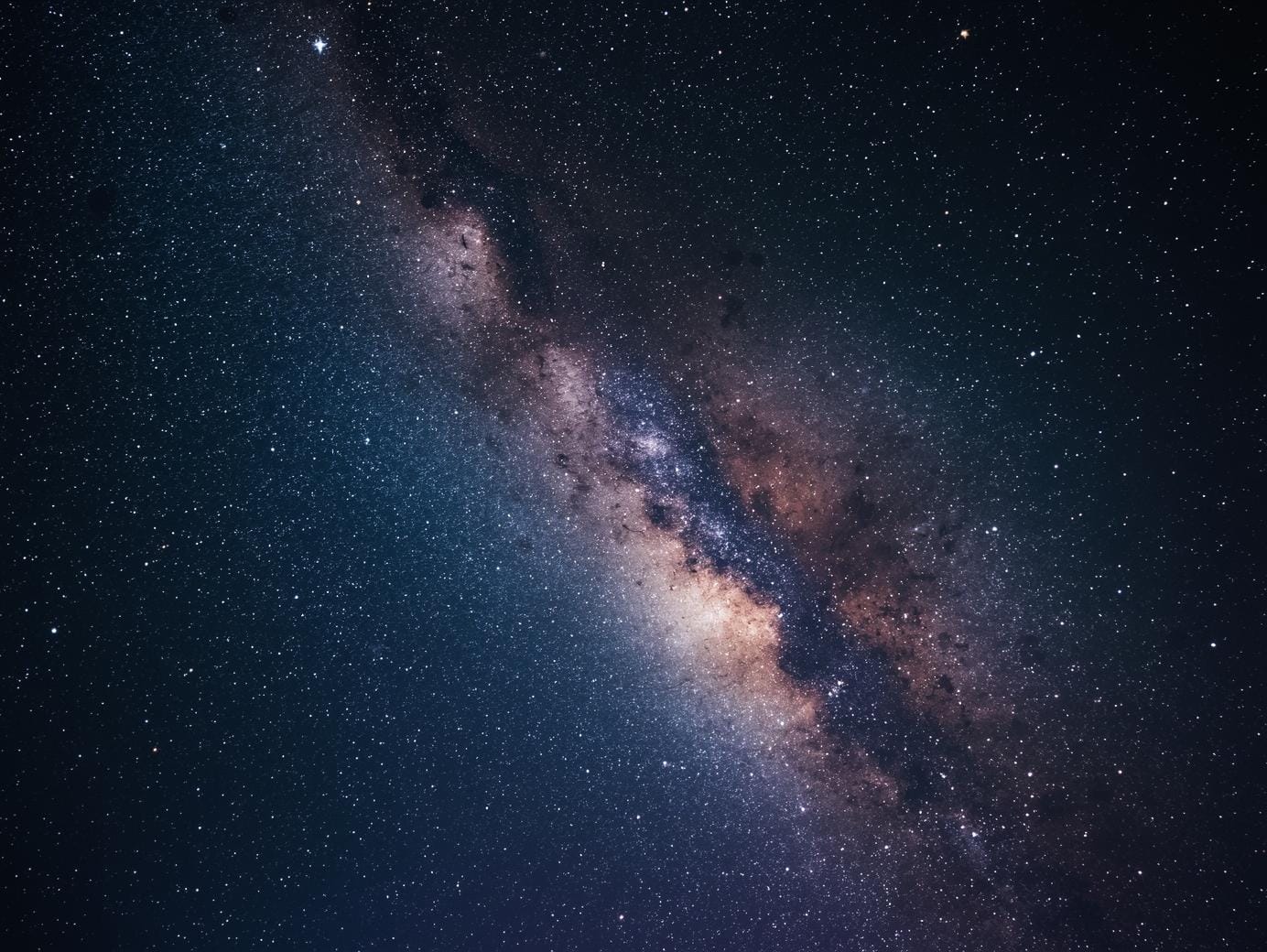
How Many Stars Are in the Milky Way? A Complete Guide to Our Galaxy’s Stellar Population
When you gaze up at the night sky, you’re looking at just a tiny fraction of the stars that exist in our home galaxy. Scientists estimate that the Milky Way contains between 100 billion and 400 billion stars, with the most widely accepted estimate falling around 200-250 billion stars. This vast cosmic population includes everything from dim red dwarfs barely visible to powerful blue giants that outshine our Sun millions of times over. Understanding how many stars in the Milky Way helps us comprehend our place in the universe and provides crucial insights into galactic structure, stellar evolution, and the potential for other worlds like our own.
The Challenge of Counting Cosmic Objects
Determining exactly how many stars in the Milky Way presents enormous scientific challenges. Unlike counting objects in a room, astronomers cannot simply tally each star individually. Our position within the galaxy itself creates observational difficulties—imagine trying to count all the trees in a forest while standing in the middle of it, with fog obscuring your view in most directions.
The dense clouds of gas and dust in the galactic plane block visible light from reaching us, particularly toward the galaxy’s center. This cosmic obscuration means we cannot directly observe huge portions of the Milky Way. Additionally, many stars are so faint that even our most powerful telescopes struggle to detect them at great distances.
To work around these limitations, astronomers use multiple sophisticated techniques. They study small, representative regions of the galaxy in great detail, then extrapolate these findings across the entire galactic structure. They also measure the total mass of the Milky Way and calculate how many stars in the Milky Way that mass could represent based on our knowledge of stellar populations and their typical mass distribution.
The Methods Behind the Numbers
Radio astronomy has revolutionized our ability to estimate stellar populations. Radio waves penetrate the dust clouds that block visible light, allowing scientists to map hydrogen gas distribution throughout the galaxy. Since stars form from this gas, its distribution helps predict stellar density in different regions.
Infrared observations provide another critical tool. Stars emit substantial infrared radiation, and this wavelength passes through dust more easily than visible light. Missions like NASA‘s Spitzer Space Telescope and the European Space Agency’s Gaia observatory have cataloged millions of stars, providing data that helps refine estimates of how many stars in the Milky Way exist.
Gravitational studies offer yet another approach. By measuring how fast stars orbit the galactic center at various distances, astronomers can calculate the galaxy’s total mass. Subtracting the mass of gas, dust, and dark matter leaves an estimate of the stellar mass, which can then be converted into star counts based on the typical mass distribution of stellar populations.
The Types of Stars That Populate Our Galaxy
Understanding how many stars in the Milky Way requires knowing what types of stars we’re counting. The vast majority—roughly 75-80%—are red dwarfs, small stars with masses between 8% and 50% of our Sun’s mass. These dim objects are incredibly difficult to detect, especially at great distances, which contributes significantly to the uncertainty in our count.
Sun-like yellow dwarf stars represent a much smaller fraction, perhaps 5-10% of the total population. Despite being less common, these stars are easier to study because of their brightness and similarity to our own star. This makes them disproportionately represented in stellar catalogs, which can skew preliminary estimates of galactic stellar populations.
Giant stars and supergiant stars are the rarest types but the most luminous. Though they might constitute less than 1% of all stars, they dominate what we see when we look at distant parts of the galaxy. A single blue supergiant can outshine tens of thousands of red dwarfs combined, making these cosmic lighthouses excellent markers for studying galactic structure even though they barely affect the actual count of how many stars in the Milky Way.
Binary and multiple star systems add another layer of complexity. Between one-third and one-half of all stars exist in systems with two or more stars orbiting each other. When astronomers discuss how many stars in the Milky Way, they typically count individual stellar objects, not star systems, which means a binary system counts as two stars.
The Milky Way’s Structure and Stellar Distribution
The Milky Way is a barred spiral galaxy roughly 100,000 light-years in diameter. Stars are not distributed evenly throughout this vast structure. The galactic bulge at the center contains a dense concentration of older stars packed into a relatively small volume. This central region alone may contain 10-20 billion stars despite occupying only a fraction of the galaxy’s total volume.
The galactic disk, where our Solar System resides about 26,000 light-years from the center, contains the majority of the Milky Way’s stars. This flattened structure includes both the thin disk, where most star formation currently occurs, and the thick disk, populated by older stars. Spiral arms wind through the disk, marking regions of enhanced density where star formation actively continues.
Surrounding the disk and bulge, the galactic halo extends in a roughly spherical distribution. This region contains globular clusters—tight balls of hundreds of thousands of old stars—along with individual stars and dark matter. The halo contributes significantly less to the total count of how many stars in the Milky Way compared to the disk and bulge, but it provides crucial information about the galaxy’s formation history.
Recent research has revealed that some stars in the halo came from smaller galaxies that the Milky Way consumed through gravitational interactions. These “galactic immigrants” can be identified through their unusual orbital patterns and chemical compositions, offering clues about how many stars in the Milky Way originated elsewhere.
Why This Number Matters
Knowing how many stars in the Milky Way has profound implications across multiple areas of astronomy and cosmology. For astrobiologists searching for extraterrestrial life, the stellar census affects estimates of how many potentially habitable planets might exist. If the Milky Way contains 200 billion stars, and even a small percentage host Earth-like planets in habitable zones, the possibilities multiply dramatically.
For astrophysicists studying galactic evolution, understanding how many stars in the Milky Way and their mass distribution helps model how galaxies form, evolve, and interact with each other. Our galaxy serves as a laboratory for understanding galaxy formation throughout the universe because we can study it in far greater detail than distant galaxies.
The stellar count also relates to understanding the galaxy’s fate. As astronomers track how many stars in the Milky Way exist now and compare this to the rate of star formation and stellar death, they can project how the galaxy will evolve over billions of years. Currently, the Milky Way forms roughly one to two new stars per year, a relatively modest rate compared to some galaxies but sufficient to maintain a substantial stellar population.
Common Misconceptions About Our Galactic Population
Many people assume that when we discuss how many stars in the Milky Way, we’re talking about stars visible to the naked eye. In reality, humans can see only about 4,500 to 5,000 individual stars under ideal dark-sky conditions—less than 0.000001% of the galaxy’s total stellar population. Light pollution further reduces this to just a few hundred stars for most people living in urban areas.
Another misconception involves the precision of the estimate. The wide range between 100 billion and 400 billion stars might seem like an unacceptably large margin of error. However, this range reflects genuine scientific uncertainty rather than poor methodology. The difficulty of observing distant, faint stars and the complexity of the galaxy’s structure mean that refining this estimate requires continued advances in observational technology and theoretical modeling.
Some people wonder whether newly discovered stars change the count of how many stars in the Milky Way. In fact, astronomers are not discovering previously unknown existing stars in significant numbers that would alter the total estimate. Instead, they’re improving their ability to observe and catalog stars that were always there but too faint or obscured to detect with older instruments.
The Future of Stellar Census Taking
Advanced observatories and space missions continue to refine our understanding of how many stars in the Milky Way. The Gaia spacecraft, launched by the European Space Agency, has created the most precise three-dimensional map of the galaxy ever produced, cataloging positions, distances, and motions for nearly two billion stars. This represents less than 1% of the total stellar population but provides an unprecedented sample for understanding the galaxy’s structure.
Ground-based telescopes with adaptive optics can now peer through atmospheric distortion to observe faint stars with unprecedented clarity. Large-scale survey projects systematically scan the sky in multiple wavelengths, building comprehensive catalogs that help astronomers understand stellar populations in different regions of the galaxy.
Machine learning and artificial intelligence are becoming valuable tools for analyzing the vast datasets these surveys produce. Algorithms can identify patterns in stellar populations, distinguish different types of stars, and help extrapolate from observed samples to estimate how many stars in the Milky Way exist in total with ever-improving accuracy.
Comparing Our Galaxy to Others
Understanding how many stars in the Milky Way helps astronomers contextualize our galaxy within the broader universe. The Milky Way is a large galaxy compared to most, but not exceptional. Our nearest large galactic neighbor, Andromeda, contains roughly one trillion stars—several times more than the Milky Way. In about 4.5 billion years, these two galaxies will collide and eventually merge, combining their stellar populations into a single elliptical galaxy.
Smaller satellite galaxies orbit the Milky Way, including the Large and Small Magellanic Clouds visible from the Southern Hemisphere. These galaxies contain far fewer stars—perhaps 30 billion and 3 billion respectively—and will eventually be absorbed by the Milky Way, adding to the count of how many stars in the Milky Way over cosmic timescales.
At the other extreme, giant elliptical galaxies in the centers of galaxy clusters can contain over 100 trillion stars, making them hundreds of times more populous than our galaxy. These cosmic monsters formed through multiple galactic mergers over billions of years, accumulating stars from numerous smaller galaxies.
Practical Implications for Space Exploration
When space agencies and private companies plan missions beyond our Solar System, understanding how many stars in the Milky Way and their distribution influences target selection. The nearest stars to Earth are prime candidates for missions seeking to detect or even visit other planetary systems. With hundreds of billions of stars spread across the galaxy, statistically speaking, there should be many stars with conditions suitable for life relatively nearby in cosmic terms.
The density of stars in our region of the galaxy—about one star per 300 cubic light-years—means that interstellar distances are vast even to our nearest neighbors. This spatial distribution, a direct consequence of how many stars in the Milky Way are packed into its enormous volume, makes interstellar travel extraordinarily challenging with current or near-future technology.
Conclusion: Our Place Among the Stars
The question of how many stars in the Milky Way connects us to the vastness of the cosmos and reminds us of both our insignificance and our uniqueness. Current estimates place the number between 100 and 400 billion stars, with approximately 200-250 billion being the most commonly cited figure. This vast stellar population includes an incredible diversity of objects, from tiny red dwarfs that will burn for trillions of years to massive blue giants that live fast and die young in spectacular supernovae.
As our observational capabilities improve and our understanding of galactic structure deepens, estimates of how many stars in the Milky Way will continue to be refined. Each advancement brings us closer to a complete picture of our galactic home and helps answer fundamental questions about star formation, planetary systems, and the possibility of life elsewhere in the universe. The stars we count today represent not just points of light in the night sky, but entire solar systems with their own stories, histories, and perhaps even civilizations looking back at us.
Frequently Asked Questions
How do scientists know how many stars in the Milky Way if they can’t count them all?
Scientists use statistical sampling methods combined with measurements of the galaxy’s total mass and light output. They study representative regions in detail, then extrapolate these findings across the entire galaxy based on its known structure. Multiple independent methods provide estimates that converge on a range of 100-400 billion stars, giving confidence in these figures despite the inability to count each star individually.
Are new stars being born in the Milky Way, and does this change the total count?
Yes, the Milky Way currently forms approximately one to two new stars per year. However, stars also die at a similar rate, so the net change is relatively small over human timescales. When astronomers estimate how many stars in the Milky Way, they’re describing a snapshot of the current stellar population, which remains relatively stable over millions of years despite continuous star birth and death.
What percentage of Milky Way stars are similar to our Sun?
Only about 5-10% of stars in the Milky Way are similar to our Sun in size, mass, and temperature. The vast majority—roughly 75-80%—are smaller, cooler red dwarf stars. This means Sun-like stars are relatively uncommon, though they’re easier to study than red dwarfs, which makes them appear more prominent in astronomical catalogs than their actual numbers would suggest.
Could there be significantly more stars than current estimates suggest?
While the uncertainty range is large (100-400 billion), dramatic underestimation is unlikely. The main source of potential undercounting involves very faint red dwarfs, but even generous estimates of these dim stars still fall within the upper range of current figures. Future observations might shift the estimate within this range, but discovering that the true number is double or triple current estimates would be extremely surprising given multiple independent lines of evidence.
How does the number of stars in the Milky Way compare to the number of galaxies in the universe?
Remarkably, estimates suggest there are roughly 100-200 billion galaxies in the observable universe—a similar order of magnitude to how many stars in the Milky Way. This means the total number of stars in the observable universe approaches an almost incomprehensible 10^22 to 10^24 stars (10 sextillion to 1 septillion), putting our galaxy’s stellar population in cosmic perspective.
Can astronomers tell how many of these stars have planets?
Recent exoplanet research suggests that most stars host at least one planet, meaning there could be hundreds of billions of planets in the Milky Way. The Kepler Space Telescope’s findings indicate that roughly 20-25% of Sun-like stars have Earth-sized planets in their habitable zones. Applied across the entire galaxy, this suggests billions of potentially habitable worlds exist among the vast number of stars in the Milky Way.
Why is there such a large range in the estimates (100-400 billion)?
The uncertainty stems from several factors: difficulty observing faint red dwarf stars, which dominate the stellar population; dust and gas obscuring much of the galaxy; uncertainty about the galaxy’s exact mass and how much of that mass consists of stars versus gas, dust, and dark matter; and the complex three-dimensional structure of the galaxy. As observational technology improves, this range will narrow, but some uncertainty is inherent when studying a galaxy from within.