Introduction: Why Knowing How to Jumpstart a Car Matters
Few things are more frustrating than turning your key (or pressing the start button) and hearing nothing but a disappointing click. A dead battery is one of the most common car issues people face — and fortunately, one of the easiest to fix if you know what you’re doing.
Learning how to jumpstart a car correctly is a simple skill that saves time, money, and unnecessary panic. Whether you’re stuck in a parking lot, driveway, workplace, or roadside, this guide gives you a reliable, step-by-step solution that anyone can follow.
Understanding How a Car Battery Works
Before jumping a car, it’s useful to understand the basics of what’s happening under the hood.
A car battery:
-
Stores electrical energy
-
Powers the starter motor
-
Runs your car’s electrical systems (lights, radio, sensors)
-
Stabilizes voltage for the entire vehicle
When your battery is dead, there simply isn’t enough power to start the engine. Jumpstarting temporarily provides that power by borrowing energy from a second vehicle or a jump starter.
Think of it as giving your battery a temporary “boost” so it can wake up.
Signs Your Car Battery Is Dead (or Nearly Dead)
Most common signs:
-
Engine clicks but won’t start
-
Dash lights flicker or are dim
-
Interior dome light is weak or doesn’t turn on
-
Slow cranking
-
Battery warning light on dashboard
Examples:
-
You put your key in, turn it, and hear a rapid, repetitive clicking.
-
The radio won’t turn on.
-
The headlights are yellow and faded instead of bright white.
Knowing these signs helps confirm the issue before jumpstarting.
Tools You Need Before Jumpstarting a Car
To jumpstart safely, you’ll need one of the following:
Option A: Jumper Cables
-
Should be 4–6 gauge for best performance
-
Look for heavy-duty, copper-clad cables
-
Length: 12–20 feet
Option B: Portable Jump Starter
A modern essential.
Benefits:
-
Works without another vehicle
-
Safe, fast, and convenient
-
Eliminates dependency on strangers
Portable jump starters are becoming the preferred method due to safety and ease of use.
Safety Precautions First (Critical Step)
Jumpstarting is safe if done properly, but mistakes can damage your car’s electrical system.
Before starting:
-
Turn both vehicles completely off
-
Ensure both cars are in Park or Neutral
-
Keep the red and black clamps from touching
-
Remove any loose jewelry
-
Avoid smoking near the battery
-
Check the battery for leaks, cracks, or swelling — if you see any, do NOT jump the car
A few seconds of caution keeps you safe.
How to Jumpstart a Car Using Jumper Cables (Step-by-Step)
This is the most common method. Follow this sequence exactly.
Step 1: Position the Working Vehicle
Park the working car close enough so cables reach, but ensure vehicles do NOT touch.
Turn off the engine.
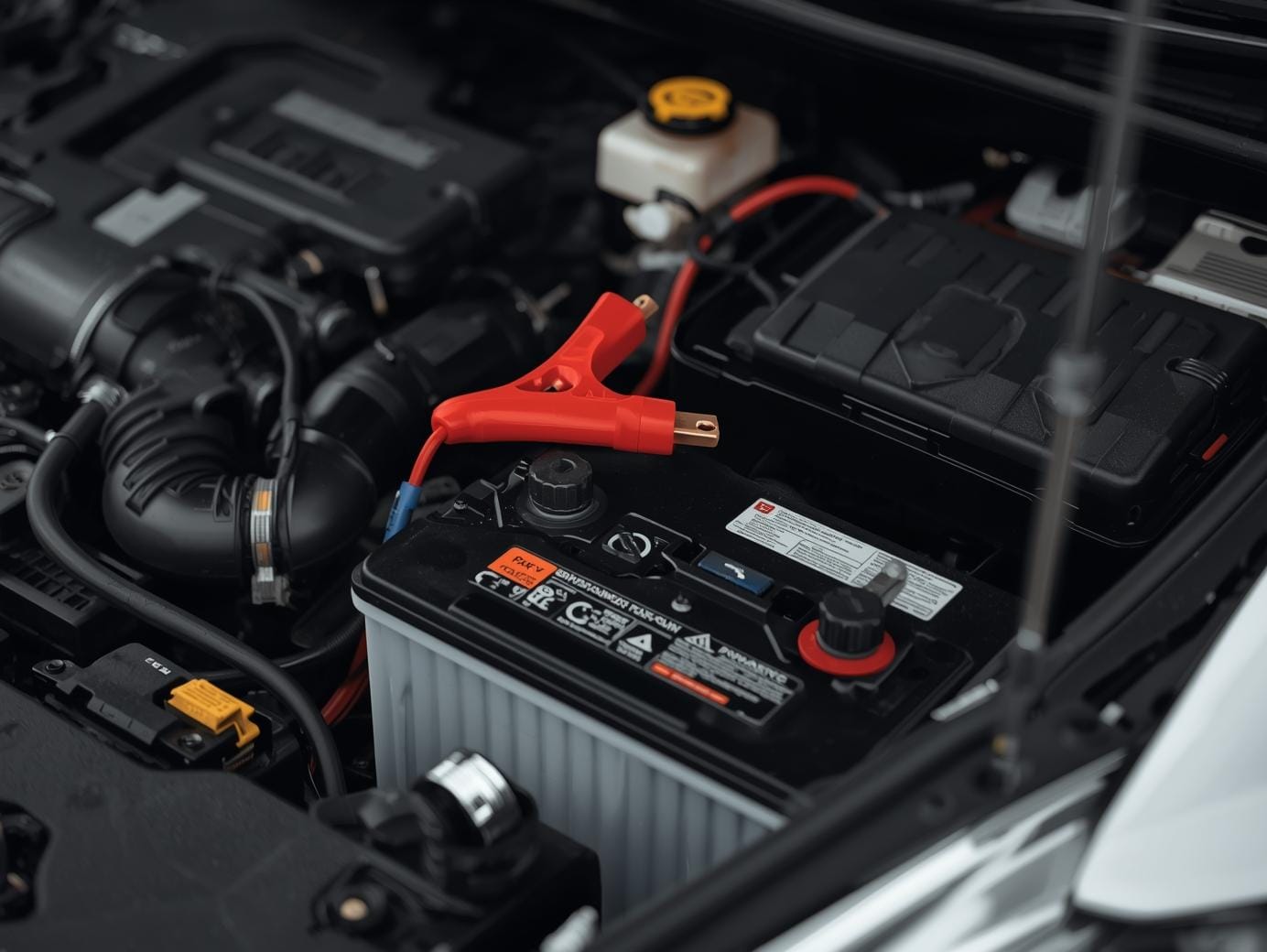
Step 2: Identify Battery Terminals
-
Red = Positive (+)
-
Black = Negative (–)
Clean off corrosion if needed.
Step 3: Attach the Jumper Cables in the Correct Order
Correct Order to Connect:
-
Red clamp → Dead battery positive (+)
-
Red clamp → Good battery positive (+)
-
Black clamp → Good battery negative (–)
-
Black clamp → Unpainted metal surface on dead car
(NOT the battery — this prevents sparks)
This is the safest and manufacturer-recommended sequence.
Step 4: Start the Working Car
Let it idle for 2–5 minutes to transfer charge.
Example:
If your dead battery is very weak, give it extra time.
Step 5: Start the Dead Car
Try starting it.
If it doesn’t start:
-
Wait another 2–3 minutes
-
Increase the working car’s RPM slightly
-
Try again
Most cars start within 1–4 minutes.
Step 6: Disconnect in Reverse Order
Remove clamps in this order:
-
Black clamp from metal surface
-
Black clamp from good battery
-
Red clamp from good battery
-
Red clamp from dead battery
Step 7: Let the Jumpstarted Car Run
Let your car run for 15–30 minutes, or drive for at least 15 miles.
This helps recharge the battery through the alternator.
How to Jumpstart a Car with a Portable Jump Starter
Portable jump starters have made the process far easier.
Step-by-Step Instructions
1. Turn off your car
All power must be off.
2. Connect clamps to the battery
-
Red to positive (+)
-
Black to negative (–)
Most jump starters have safety sensors — if the connection is wrong, they won’t turn on.
3. Power on the jump starter
Press the ON or BOOST button.
4. Start your car
It should start immediately or within 1–2 seconds.
5. Disconnect clamps
Follow the device instructions, usually black first, then red.
6. Recharge your jump starter after use
Common Mistakes to Avoid When Jumpstarting a Car
1. Connecting clamps to the wrong terminals
This can cause electrical damage.
2. Letting clamps touch
Creates dangerous sparks.
3. Jumpstarting a leaking or swollen battery
Risk of explosion.
4. Removing cables too soon
Engine may stall again.
5. Revving too aggressively
Can damage battery or alternator.
Why Your Battery Died: The Most Common Causes
According to AAA and automotive research, the top battery-draining reasons include:
1. Leaving lights on
Most common cause.
2. Freezing or extremely hot weather
Heat shortens battery life. Cold reduces cranking power.
3. Old battery (3–5 years)
Most batteries fail around year 4.
4. Faulty alternator
If your alternator isn’t charging the battery, the car will still die.
5. Corroded terminals
6. Short trips
Engine doesn’t run long enough to recharge the battery.
How Long to Let the Car Run After a Jumpstart
Let your car run:
-
At least 15–30 minutes, OR
-
Drive 15–20 miles
This allows the alternator to replenish the battery.
Pro tip: Idling charges slower than driving.
What to Do If Your Car Still Won’t Start
If the jumpstart fails after several attempts, the issue may be:
1. Dead battery that cannot hold a charge
Battery is completely worn out.
2. Failed alternator
Car starts with cables but dies immediately after removing them.
3. Faulty starter motor
Jumpstarting won’t help.
4. Blown fuse
Often overlooked.
5. Loose or corroded battery terminals
If repeated attempts fail, get professional help to diagnose the system.
Maintenance Tips to Prevent Future Dead Batteries
1. Test your battery every 6 months
Most auto shops offer free testing.
2. Clean terminals regularly
Corrosion blocks proper flow.
3. Drive your car weekly
Short trips kill batteries.
4. Turn off lights before leaving the vehicle
5. Replace battery every 3–5 years
6. Keep a portable jump starter in your trunk
It eliminates dependency on other drivers.
Related Statistics & Real-World Data
Battery Failure Stats
-
1 in 4 roadside assistance calls are battery-related (AAA).
-
Heat causes 70% of battery lifespan reduction.
-
A battery loses 35% of its power at 32°F and 60% at 0°F.
Jumpstarting Data
-
Most cars start within 3 minutes of proper jumpstarting.
-
Batteries older than 4 years jumpstart successfully only 62% of the time.
Portable Jump Starter Trend
-
Sales have increased 500% in the last 5 years due to convenience and safety.
FAQs
1. Can a completely dead battery be jumpstarted?
Yes, unless the battery is damaged or cannot hold a charge.
2. How long does a jumpstart last?
Only long enough to get the car running — the alternator does the real charging.
3. Is it safe to jumpstart in the rain?
Yes, as long as you avoid standing water and keep clamps secure.
4. Why does my car die after removing jumper cables?
Likely a failing alternator.
5. Can you jumpstart a modern car with electronics?
Yes — today’s cars are designed for safe jumpstarting if done correctly.
Conclusion
Knowing how to jumpstart a car turns a stressful moment into a quick fix. With the right tools, safe technique, and a little confidence, you can revive your vehicle in minutes and get back on the road.
If you want more helpful guides, car care tips, and step-by-step breakdowns just like this one — reach out and I’ll help you create SEO-optimized content that ranks, engages, and delivers real value.