What Does TPMS Mean on a Car: Your Complete Guide to Tire Pressure Monitoring Systems
Have you ever noticed a small light on your dashboard that looks like a tire with an exclamation mark? That’s your TPMS system trying to tell you something important about your tires. But what exactly does TPMS mean, and why should you care about it?
In today’s automotive world, TPMS has become as essential as your seatbelt or airbag. It’s a safety feature that most drivers encounter but few truly understand. Whether you’re a seasoned driver or just got your license, understanding TPMS can save you money, improve your safety, and keep you rolling smoothly down the road.
Understanding TPMS: The Basics
What Does TPMS Stand For?
TPMS stands for Tire Pressure Monitoring System. Think of it as your car’s way of keeping tabs on your tire pressure 24/7. It’s like having a vigilant friend who constantly checks if your tires are properly inflated and alerts you when something’s not right.
This system uses sensors to monitor the air pressure in your tires and warns you when the pressure drops below safe levels. It’s not just about convenience – it’s about keeping you safe on the road and ensuring your vehicle performs at its best.
Why Was TPMS Invented?
The story behind TPMS is rooted in safety concerns that emerged in the late 1990s. After a series of tire-related accidents involving SUVs, particularly those equipped with certain tire brands, the automotive industry and government regulators realized that drivers needed better ways to monitor tire pressure.
You see, underinflated tires can lead to catastrophic blowouts, especially at highway speeds. They also cause increased fuel consumption, premature tire wear, and poor vehicle handling. The solution? A system that would automatically monitor tire pressure and alert drivers before problems became dangerous.
How Does TPMS Work in Your Vehicle?
Understanding how TPMS works is like understanding how your smoke detector keeps you safe – it’s constantly monitoring conditions and alerts you when intervention is needed.
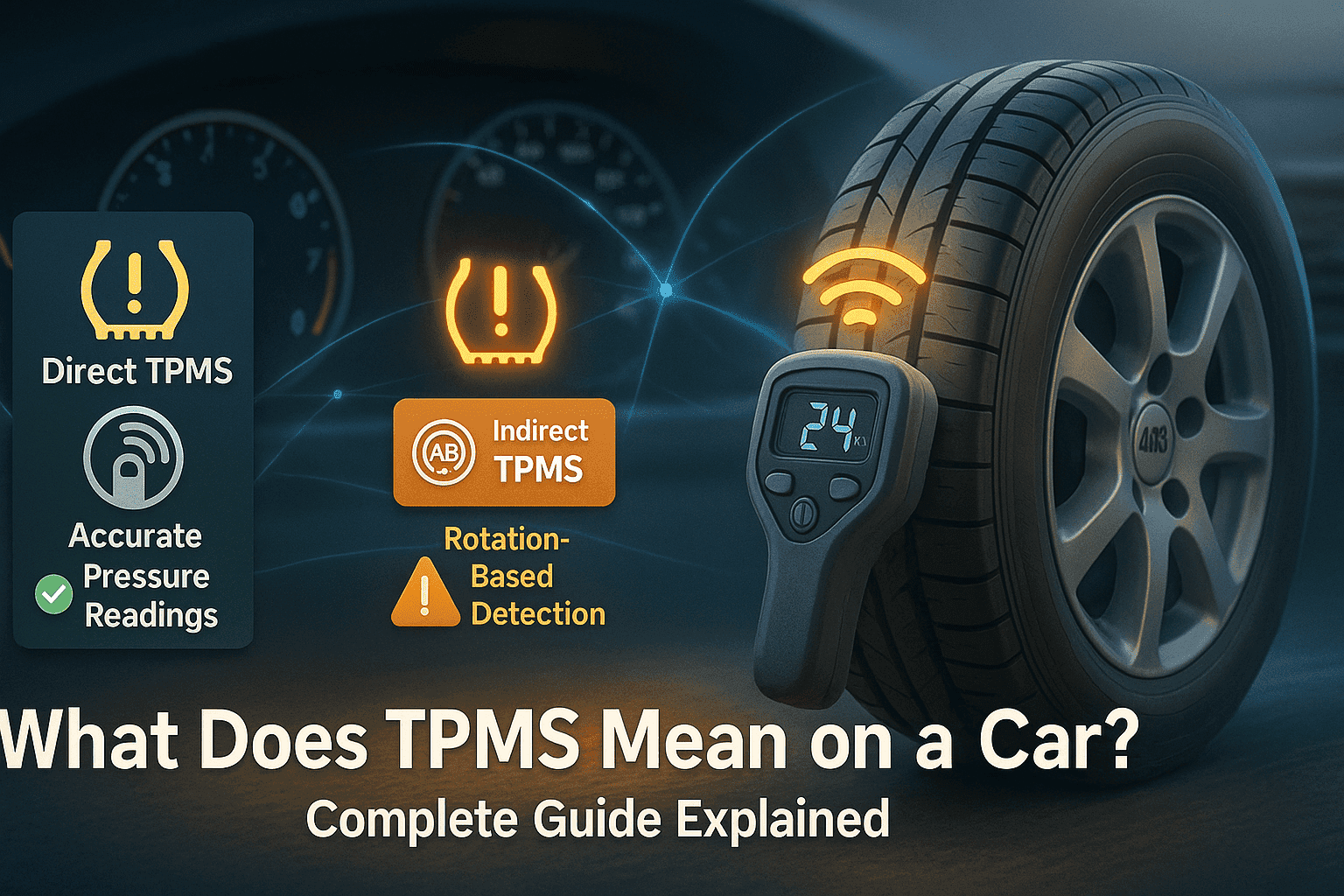
Direct TPMS Systems
Direct TPMS systems are the more sophisticated of the two main types. These systems use actual pressure sensors mounted inside each tire, typically attached to the valve stem or wheel rim. These sensors are like tiny weather stations for your tires – they measure not just pressure but often temperature as well.
The sensors continuously monitor tire pressure and transmit this data wirelessly to your car’s computer system. When pressure drops below the predetermined threshold (usually 25% below the recommended pressure), the system triggers a warning light on your dashboard.
What makes direct systems special is their accuracy. They can tell you exactly which tire has low pressure and by how much. Some advanced systems even display real-time pressure readings for each tire on your dashboard or infotainment screen.
Indirect TPMS Systems
Indirect TPMS systems take a different approach – they’re like detectives that solve the pressure mystery using clues rather than direct evidence. Instead of measuring actual tire pressure, these systems monitor wheel speed through your car’s Anti-lock Braking System (ABS) sensors.
Here’s the clever part: when a tire loses pressure, its diameter decreases slightly, causing it to rotate faster than properly inflated tires. The system detects this difference in rotation speed and interprets it as low tire pressure.
While indirect systems are less expensive and don’t require battery-powered sensors in each tire, they have limitations. They can’t tell you which specific tire has low pressure, and they may not detect gradual pressure loss or situations where all tires lose pressure simultaneously.
Sensor Technology Explained
The sensors in direct TPMS systems are marvels of miniaturization. These tiny devices, about the size of a matchbox, contain pressure sensors, temperature sensors, accelerometers, radio transmitters, and batteries – all packed into a unit that can withstand the harsh environment inside a rotating tire.
These sensors typically operate on radio frequencies around 315 MHz or 433 MHz, depending on your vehicle’s region and manufacturer. They’re programmed with unique identification codes that allow your car’s computer to distinguish between the sensors on different tires.
Data Transmission Process
The communication between TPMS sensors and your vehicle’s computer happens through a sophisticated process. Sensors typically transmit data every few minutes during normal driving, but they can also be triggered to transmit more frequently during rapid pressure changes or when the vehicle’s TPMS system requests updated information.
Your vehicle’s TPMS receiver, usually located near the dashboard or integrated into the body control module, receives these transmissions and processes the data. The system then compares the received pressure readings to predetermined thresholds and triggers appropriate warnings when necessary.
Types of TPMS Systems
Factory-Installed vs. Aftermarket Systems
Factory-installed TPMS systems come integrated with your vehicle from the manufacturer. These systems are specifically designed for your car model and are fully integrated with other vehicle systems. They typically offer the most reliable performance and seamless integration with your dashboard displays.
Aftermarket TPMS systems, on the other hand, can be added to vehicles that didn’t come with the technology. While they may not integrate as seamlessly with your vehicle’s existing systems, they can provide similar monitoring capabilities. These systems often use external sensors that attach to valve caps or internal sensors that replace existing valve stems.
Wireless vs. Wired Systems
Modern TPMS systems are predominantly wireless, using radio frequency communication between tire-mounted sensors and the vehicle’s receiver. This wireless approach eliminates the need for physical connections that could be damaged or compromised as wheels rotate and move with suspension travel.
Some older or specialized systems may use wired connections, but these are increasingly rare due to the practical challenges of routing wires from rotating wheels to the vehicle body.
TPMS Warning Signs and Alerts
Dashboard Warning Light Meanings
Your TPMS warning light is like a traffic signal for tire safety. The most common symbol looks like a cross-section of a tire with an exclamation mark in the center. When this light illuminates, it’s your car’s way of saying, “Hey, pay attention to your tires!”
However, TPMS lights can display different patterns with different meanings. A solid light typically indicates that one or more tires have low pressure. A flashing light that then stays solid usually indicates a malfunction in the TPMS system itself, meaning the sensors or receiver aren’t working properly.
Some newer vehicles provide more detailed information, showing individual tire pressures on the dashboard display or indicating which specific tire needs attention. This advancement makes troubleshooting much easier for drivers.
Audio Alerts and Notifications
Many modern vehicles complement visual warnings with audio alerts. These might be simple beeps, chimes, or even voice notifications that announce “low tire pressure” or specify which tire needs attention.
Some luxury vehicles take this further by providing detailed voice instructions, such as “Left front tire pressure is low. Please check tire pressure at your earliest convenience.”
Understanding Different Alert Patterns
Different alert patterns convey different messages. A single illumination of the warning light during startup might just be a system check – this is normal. However, if the light stays on during driving, it indicates an actual pressure problem.
A flashing pattern followed by a solid light typically indicates a system malfunction rather than a pressure issue. In this case, the system may not be monitoring your tires effectively, and you should have it checked by a professional.
Benefits of Having TPMS in Your Car
Safety Advantages
The primary benefit of TPMS is safety – it’s like having a guardian angel watching over your tires. Properly inflated tires maintain better contact with the road, providing improved traction, handling, and braking performance. This is especially crucial during emergency maneuvers or adverse weather conditions.
Underinflated tires generate excessive heat due to increased flexing of the tire walls. This heat buildup can lead to tire failure, particularly dangerous at highway speeds. TPMS helps prevent these scenarios by alerting you before pressure drops to dangerous levels.
Studies have shown that vehicles equipped with TPMS have significantly lower rates of tire-related accidents compared to those without the system. It’s particularly valuable for detecting slow leaks that might otherwise go unnoticed until they become serious problems.
Fuel Economy Improvements
Here’s where TPMS pays for itself – properly inflated tires roll more efficiently, reducing the energy needed to move your vehicle. According to the U.S. Department of Energy, underinflated tires can lower gas mileage by up to 0.2% for every 1 psi drop in the average pressure of all tires.
While this might not sound like much, it adds up over time. For the average driver, maintaining proper tire pressure can improve fuel economy by 3-5%, translating to real savings at the gas pump. TPMS ensures you maintain optimal pressure without having to manually check your tires constantly.
Tire Longevity Benefits
Tires are expensive, and TPMS helps protect this investment. Underinflated tires wear unevenly and prematurely, particularly on the outer edges. This uneven wear pattern not only shortens tire life but can also affect vehicle handling and safety.
By maintaining proper pressure, TPMS helps ensure even tread wear across the entire tire surface. This maximizes tire life and helps you get the full value from your tire investment. Some drivers report getting 20-30% more life from their tires simply by maintaining proper pressure consistently.
Common TPMS Problems and Issues
Sensor Battery Life
Like any electronic device, TPMS sensors have limitations, and battery life is the most common concern. Sensor batteries typically last 5-10 years, depending on usage patterns and environmental conditions. When batteries die, sensors stop transmitting, causing system malfunctions.
The challenge is that sensor batteries aren’t replaceable – when the battery dies, you need to replace the entire sensor. This can be frustrating for vehicle owners, especially when multiple sensors fail around the same time.
Cold weather accelerates battery drain, so vehicles in colder climates may experience shorter sensor life. Additionally, sensors that are frequently activated (such as in vehicles driven frequently on rough roads) may have shorter battery life due to increased transmission activity.
False Alarms and Malfunctions
TPMS systems aren’t perfect, and false alarms can be frustrating. These might occur due to temperature changes, electromagnetic interference, or sensor malfunctions. Rapid temperature changes can cause tire pressure to fluctuate, triggering warnings even when tires are properly inflated.
Electronic interference from other devices or even certain road surfaces can sometimes disrupt sensor communications, causing temporary malfunctions. While these issues are relatively rare, they can be confusing for drivers who don’t understand the underlying technology.
Temperature-Related Issues
Temperature has a significant impact on tire pressure – for every 10°F change in ambient temperature, tire pressure changes by approximately 1-2 psi. This natural phenomenon can trigger TPMS warnings during seasonal temperature changes, even when nothing is actually wrong with your tires.
Understanding this relationship helps drivers interpret TPMS warnings more accurately. A warning that appears on the first cold morning of winter might simply indicate that your tires need air due to temperature-related pressure drop rather than indicating a leak or other problem.
TPMS Maintenance and Care
Regular System Checks
Maintaining your TPMS is like maintaining any other vehicle system – it requires periodic attention to function properly. While the system operates automatically, drivers should understand how to interpret its signals and know when professional service is needed.
Monthly visual checks of the TPMS warning light during startup can help identify system problems early. If the light behaves unusually – flashing when it should be solid, or staying on when it should turn off – it may indicate a developing problem.
Professional Maintenance Requirements
TPMS systems require professional attention during tire service, wheel changes, and sensor replacements. Tire technicians need specialized tools to properly handle TPMS sensors during tire mounting and balancing procedures.
When purchasing new tires, it’s important to work with tire shops that understand TPMS systems and have the proper equipment to service them. Improper handling during tire service can damage sensors, leading to expensive repairs and system malfunctions.
TPMS Reset and Calibration Process
When to Reset Your TPMS
TPMS reset procedures are necessary after tire pressure adjustments, tire rotations, or sensor replacements. The reset process re-establishes communication between sensors and the vehicle’s computer system, ensuring accurate monitoring.
Different situations require different reset approaches. After simply adding air to low tires, many systems automatically clear warnings once proper pressure is restored and the vehicle is driven for a short distance. However, after tire rotations or sensor replacements, manual reset procedures are typically necessary.
Step-by-Step Reset Instructions
Reset procedures vary by vehicle manufacturer, but most follow similar patterns. Common methods include pressing and holding a reset button, following specific sequences of ignition and brake pedal operations, or using diagnostic tools to initiate reset procedures.
Some vehicles require driving at specific speeds for predetermined distances to complete the reset process. This allows the system to relearn sensor positions and establish proper communication protocols.
Professional vs. DIY Reset
While many TPMS reset procedures can be performed by vehicle owners, some require professional diagnostic equipment. Complex systems or those experiencing persistent problems may need professional attention to ensure proper operation.
Professional reset procedures are particularly important after sensor replacements or when dealing with system malfunctions. Technicians have access to specialized diagnostic tools that can identify and resolve problems that aren’t apparent to vehicle owners.
Cost Considerations for TPMS
Replacement Costs
TPMS sensor replacement costs vary widely depending on vehicle type and sensor technology. Individual sensors typically cost $50-$200 each, with installation adding additional expense. Luxury vehicles and those with advanced systems often have higher replacement costs.
The need to replace multiple sensors simultaneously can result in significant expenses. However, it’s important to view these costs in the context of the safety and economic benefits that TPMS provides over the life of the vehicle.
Maintenance Expenses
Beyond sensor replacement, TPMS maintenance costs are generally minimal. Regular tire service may cost slightly more at shops that properly service TPMS-equipped vehicles, but this additional cost is typically modest.
The long-term economic benefits of TPMS – improved fuel economy, extended tire life, and reduced risk of tire-related vehicle damage – generally outweigh the system’s maintenance costs over the life of the vehicle.
Legal Requirements and Regulations
Federal Mandates
In the United States, TPMS became mandatory on all new passenger vehicles under 10,000 pounds starting with the 2008 model year. This federal mandate, implemented by the National Highway Traffic Safety Administration (NHTSA), was designed to improve vehicle safety and reduce tire-related accidents.
The regulations specify minimum performance standards for TPMS systems, including response times, accuracy requirements, and warning thresholds. Systems must detect pressure losses of 25% or more below recommended levels and alert drivers within specified timeframes.
State-Specific Requirements
While federal regulations establish minimum TPMS requirements, some states have additional regulations regarding system maintenance and vehicle inspection requirements. Some states include TPMS functionality checks as part of annual vehicle safety inspections.
Vehicle owners should understand their local requirements regarding TPMS maintenance and functionality, particularly when purchasing used vehicles or when system problems develop.
Future of TPMS Technology
Emerging Technologies
The future of TPMS technology promises even greater integration with vehicle systems and enhanced capabilities. Advanced systems are beginning to monitor not just pressure and temperature but also tread depth, tire wear patterns, and road surface conditions.
Some manufacturers are exploring systems that can predict tire problems before they occur, using artificial intelligence to analyze patterns in sensor data and driving conditions. These predictive systems could alert drivers to developing problems days or weeks before traditional systems would detect issues.
Integration with Smart Vehicles
As vehicles become more connected and autonomous, TPMS systems are evolving to provide more comprehensive tire monitoring and management. Future systems may automatically schedule tire service appointments, provide detailed maintenance recommendations, and even adjust vehicle performance parameters based on tire conditions.
Integration with smartphone apps and cloud-based services allows for remote monitoring and detailed analytics about tire performance and vehicle usage patterns. These capabilities provide unprecedented insight into tire health and vehicle performance optimization.
Conclusion
TPMS technology represents a significant advancement in vehicle safety and efficiency. Understanding what TPMS means and how it works empowers drivers to make better decisions about vehicle maintenance and safety. From its origins as a response to safety concerns to its current role as a standard safety feature, TPMS has proven its value in preventing accidents, improving fuel economy, and extending tire life.
As technology continues to evolve, TPMS systems will become even more sophisticated and integrated with other vehicle systems. For drivers, the key is understanding how to interpret TPMS warnings, maintain the system properly, and work with qualified professionals when service is needed. By embracing this technology and understanding its capabilities, drivers can enjoy safer, more efficient, and more economical vehicle operation.
The investment in understanding and maintaining your TPMS system pays dividends in safety, savings, and peace of mind. Whether you’re dealing with a simple low-pressure warning or planning for sensor replacement, knowledge of TPMS technology helps you make informed decisions about your vehicle’s care and operation.
Frequently Asked Questions
1. How do I know if my car has TPMS?
Most vehicles manufactured after 2008 in the United States are required to have TPMS. You can identify TPMS-equipped vehicles by looking for the tire pressure warning light symbol on your dashboard during startup, checking your owner’s manual, or looking for pressure monitoring displays in your instrument cluster or infotainment system.
2. Can I drive with the TPMS light on?
While you can technically drive with the TPMS light on, you should address the underlying issue as soon as possible. If the light indicates low tire pressure, driving on underinflated tires can be dangerous and cause tire damage. If the light indicates a system malfunction, you’re driving without tire pressure monitoring protection.
3. How much does it cost to replace TPMS sensors?
TPMS sensor replacement costs typically range from $50-$200 per sensor, plus installation costs. Luxury vehicles and advanced systems may have higher costs. While expensive, replacement costs should be weighed against the safety and economic benefits of having functional TPMS.
4. Why does my TPMS light come on in cold weather?
Cold temperatures cause tire pressure to drop naturally – approximately 1-2 psi for every 10°F temperature decrease. This natural pressure drop can trigger TPMS warnings during cold weather, even when there’s no actual tire problem. Adding air to compensate for temperature-related pressure loss typically resolves cold-weather TPMS warnings.
5. Can I install TPMS on an older vehicle that doesn’t have it?
Yes, aftermarket TPMS systems are available for older vehicles. These systems may not integrate as seamlessly as factory-installed systems, but they provide similar monitoring capabilities. Installation typically requires professional service to ensure proper sensor placement and system calibration.
Please don’t forget to leave a review.